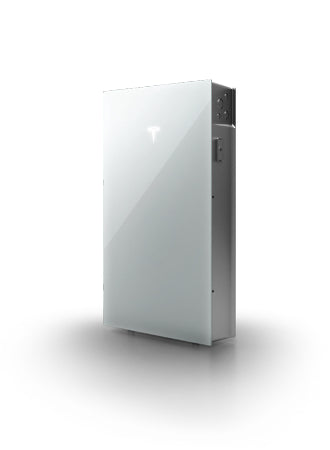
Tesla Powerwall 3 - 3x MPPT 11.04kW 1PH Inverter with 13.5kWh Battery
Tesla Powerwall 3 — 13.5 kWh fully usable, 11.04 kW of AC output and a 20 kW solar inverter in one unit.
A battery pays for itself by moving energy in time: solar generated at midday and electricity bought on an overnight rate, both spent in the evening. What decides whether it pays is the usable capacity, the charge rate and the cycle life.
Please read before ordering
Tesla Approval Process
- Installer must be MCS certified and accredited with RECC or HEIS
- Apply to be a Tesla Certified Installer directly with Tesla using the link below.
- Tesla will review your application and if suitable you will be sent a contract and NDA to sign.
- Once returned this will be countersigned by Tesla. Once countersigned you will be Tesla certified and can begin marketing the Tesla products.
- Upon confirmation from Tesla, ClearRay Solar will make products live for you to view and order through the ClearRay Solar Portal.
You cannot install and commission a system until training is completed.
Click Here to apply to be a Tesla Powerwall installer today!
About the Tesla Powerwall 3
Powerwall 3 folds the solar inverter into the battery. One unit takes up to 20 kW of array across three MPP trackers, stores 13.5 kWh of fully usable energy and puts out up to 11.04 kW of AC — enough to start a load rated at 185 A locked-rotor, which is the specification that decides whether a heat pump or a well pump will restart on backup.
Capacity and power scale separately. Up to four Powerwall 3 units give more power; up to three Expansion units behind one give more energy, to a maximum of seven units in total.
Solar to home is 97.5 % efficient and solar to battery to home 89 %. The enclosure is IP55 with IP67 around the battery and power electronics, rated indoor and outdoor from −20 to +50 °C.
Which inverter will run this battery?
This is the Powerwall 3 platform: an all-in-one unit holding the solar inverter, the 13.5 kWh battery and the backup supply, with inverter-less DC Expansion batteries behind it.
There is no separate inverter to choose. A Powerwall 3 contains its own three-MPPT solar inverter and takes up to 20 kW of array. An Expansion is the other way round — a battery with no inverter, which works only behind a Powerwall 3, up to three of them, floor mounted, joined by an Expansion harness.
Stack rules, cabling and what else the job needs
The details that decide whether this battery suits the system:
- Nominal AC output is configurable from 3.68 kW to 11.04 kW at 230 V, with maximum continuous current from 16 A to 48 A and an overcurrent protection device from 20 A to 63 A to match.
- Maximum continuous charge power is 5 kW DC, or 8 kW DC with Expansion units fitted; the AC figure is configurable to the same limits.
- Solar: 20 kW STC maximum, 600 V withstand, 60 – 550 V input range, 60 – 480 V MPPT range, three MPP trackers at 30 A and 38 A Isc each.
- Load start capability 185 A LRA. Maximum output fault current 160 A for one second, short-circuit rating 10 kA.
- Up to four Powerwall 3 units for power and up to three Expansion units for energy, seven units maximum. Islanding uses Backup Gateway 2.
- Expansion units are 52 – 92 Vdc, connect in parallel, are not field serviceable, and are floor mount only when stacked behind a Powerwall 3. The Expansion harness comes in 0.5 m, 2 m and 4 m.
- Powerwall 3 is 1,105 × 609 × 193 mm and 130 kg; an Expansion is 1,105 × 609 × 168 mm and 118.5 kg with its glass front cover and bracket.
- The unit must be reliably connected to the internet to secure the full ten-year warranty. Cellular should not be the primary connection.
- Certified to G98 and G99, IEC 62109-1/-2, IEC 62477-1, IEC 62933-5-2, IEC 62619:2022, UL 9540A and UN 38.3.
Where this battery earns its place
The Powerwall 3 is specified most often for these jobs.
Things worth knowing about this listing
- Powerwall 3 must be reliably connected to the internet to secure the full ten-year warranty, and Tesla say cellular should not be the primary connection.
- Up to four Powerwall 3 units for power and up to three Expansion units for energy, seven units in total.
Tesla Powerwall 3 technical data
Questions we get asked about this inverter
Do I need a separate inverter?
No. Powerwall 3 contains a three-MPPT solar inverter and takes up to 20 kW of array.
What is the Expansion?
A 13.5 kWh DC battery with no inverter in it. It only works behind a Powerwall 3 — up to three of them, floor mounted, joined by an Expansion harness.
How much of the 13.5 kWh can I use?
All of it. Tesla quote 13.5 kWh usable AC energy.
How many units can I have?
Up to four Powerwall 3 units for power and up to three Expansions for energy, seven in total.
Does it need an internet connection?
Yes, to secure the full ten-year warranty. Tesla say cellular should not be the primary connection.
Documents, advice and trade pricing
Every datasheet, certificate, installation manual and warranty document we hold for this product is in the Documents tab below. See the rest of our battery range, our hybrid inverters and our solar panels, or email sales@clearraysolar.com if you would like us to check a battery and inverter pairing before you order.
Three figures govern it, all in the Technical Specifications: the MPPT voltage range, the maximum input voltage and the maximum DC power. Tell us which panel you're pairing it with and we'll confirm the string layout.
G98 covers installations up to 3.68kW per phase and is notified to your DNO after commissioning. Anything larger needs G99 approval agreed beforehand. We can flag which one your design falls under.
A hybrid inverter takes a DC-coupled battery directly. A standard string inverter needs an AC-coupled battery alongside it. The Technical Specifications show which type this unit is.
Yes, up to the maximum DC power figure in the specifications. Modest oversizing is normal practice - it lifts output in winter and at either end of the day, at the cost of brief clipping at midday peak.
An MPPT tracks the optimum operating point for a string of panels. You want one per roof orientation or pitch, because panels facing different directions on a single tracker drag each other down.
The standard manufacturer warranty is listed under the Warranty tab. Extended cover is available on most brands - see Warranty Extensions.
Build your complete solar system
Everything you need in one place.
- Inverters
- Batteries
- Mounting Systems
- Cabling & Accessories
- Protection Devices
Delivery times vary by region:
- UK — 1-2 business days
- Highlands & Islands — 1-2 business days
Returns accepted within 14 days of delivery for unused items in original packaging.