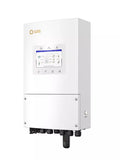
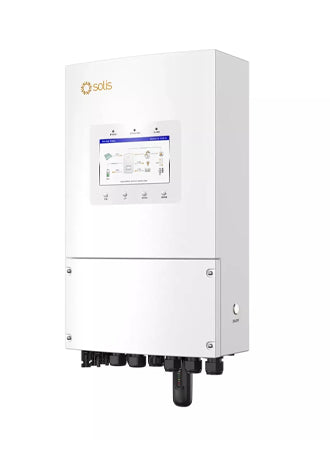
S6 3.6kW Plus Single Phase Low Voltage Hybrid Inverter
Solis S6 3.6kW Plus Single Phase Low Voltage Hybrid Inverter
S6 3.6kW Plus Single Phase Low Voltage Hybrid Inverter
Solis S6-EH1P L-PLUS Solarator — A 48 V hybrid with a generator input, 200 % backup overload and a battery current most single-phase units cannot match.
A hybrid inverter does three jobs a string inverter cannot. It converts solar DC to AC; it charges and discharges a battery on the DC side, which avoids the double conversion an AC-coupled battery pays for; and when the grid fails it islands the house and keeps a backup circuit alive from the battery.
About the Solis S6-EH1P L-PLUS Solarator
The L-PLUS is the low-voltage S6. It takes a 48 V battery — the Pylontech US-series and everything else built to that architecture — which is why it is the one to choose if you already own 48 V modules or want the freedom of a battery market that has dozens of brands in it rather than three.
Two things separate it from an ordinary 48 V hybrid. The backup output delivers twice rated power for ten seconds, which is what starts a borehole pump, a workshop compressor or an air-conditioning unit without stalling. And the generator input is a real one: multiple connection methods with automatic start and stop, so an off-grid or weak-grid site can run the generator only when the battery needs it.
It is IP66, 335 × 560 × 253 mm, and carries a 7-inch LCD with Bluetooth setup, so commissioning does not depend on a phone signal or a working Wi-Fi network on site.
Which battery does this inverter take?
This inverter takes Low voltage, 40 – 60 V nominal 48 V.
This model has a battery voltage window of 40 – 60 V, BMS communication over CAN / RS485.
Battery option to select when commissioning: PYLON_LV for Pylontech; otherwise the brand's own option, or "Lithium Battery LV" if the brand is not listed.
Models the manufacturer names as compatible: Pylontech US2000, US2000B, US2000C, US2000 PLUS, US3000, US3000A, US3000C, US5000, UP5000, Force L1, Force L2, Phantom-S and Pelio-L-5.12; plus BYD Battery-Box Premium LVS/LVL, Dyness, Fox LV52/54, Pytes, WECO, Puredrive, Soluna, BSLBATT and many others.
What we stock that fits this inverter:
String design, battery limits and what is in the box
The details that decide whether this unit suits the job:
- Battery is 48 V nominal, 40 – 60 V, lithium or lead-acid, one battery port and one BMS port, CAN or RS485.
- Battery current is the headline figure on this platform: 70 A on the 3K rising to 210 A on the 10K. Check the battery's own continuous charge and discharge rating before you assume the inverter's number.
- Two MPP trackers. The 3K to 6K take one string per tracker at 16 A; the 10K takes two per tracker at 21 A each, 42 A per tracker.
- PV input is capped at 160 % of rated DC power — 4.8 kW usable on the 3K, 16 kW on the 10K — with a 6 kW to 20 kW recommended array.
- MPPT window is 90 – 435 V with a 500 V maximum. That is a low window: a long string that suits a 1,000 V hybrid will over-voltage this one.
- Backup is rated power continuous and twice rated for 10 s, switching in under 10 ms. AC passthrough is 35 A to 65 A depending on model.
- Up to 6 units in parallel, single or three phase, to 48 kW.
- 3K to 6K are convection cooled under 40 dB; the 8K and 10K use redundant fans at under 65 dB. Do not put a fan-cooled unit in a bedroom wall.
Where this hybrid earns its place
The S6-EH1P L-PLUS Solarator is specified most often for these jobs.
Things worth knowing about this listing
- Works with a wide range of 40 – 60 V low-voltage batteries. Check the current Solis Compatible Battery List for your exact model before ordering.
Solis 3.6K technical data
Ordered with this inverter more often than anything else
A hybrid is the middle of a system, not the whole of it. These are the parts our customers add most often:
Questions we get asked about this inverter
Which batteries actually work on it?
Any 48 V nominal battery inside the 40 – 60 V window that Solis list. The Pylontech US-series is the volume answer in the UK and is on the list as PYLON_LV. What you cannot do is fit a high-voltage stack: this is a low-voltage platform and the two are different architectures, not different settings.
What will the backup output run?
Rated power continuously — 5 kW on the 5K, 10 kW on the 10K — and twice that for ten seconds while a motor starts. That covers a normal house including a fridge, freezer, boiler and sockets. An electric shower or a heat pump on full power will not run from a 3K.
Can it run without a battery?
Yes, as a grid-tied PV inverter, and the battery can be added later. The backup output only works with a battery fitted.
Does it work with a generator?
Yes, with automatic start and stop control and AC voltage detection on both the grid and the generator input, so the inverter will not back-feed a generator that is not running.
Is it noisy?
The 3K to 6K are convection cooled and quoted under 40 dB. The 8K and 10K are fan cooled at under 65 dB, which you would hear in a quiet room.
Documents, advice and trade pricing
Every datasheet, certificate, installation manual and warranty document we hold for this product is in the Documents tab below. See the rest of our hybrid inverter range, our batteries and our solar panels, or email sales@clearraysolar.com if you would like us to check a battery pairing or a string design before you order.
Three figures govern it, all in the Technical Specifications: the MPPT voltage range, the maximum input voltage and the maximum DC power. Tell us which panel you're pairing it with and we'll confirm the string layout.
G98 covers installations up to 3.68kW per phase and is notified to your DNO after commissioning. Anything larger needs G99 approval agreed beforehand. We can flag which one your design falls under.
A hybrid inverter takes a DC-coupled battery directly. A standard string inverter needs an AC-coupled battery alongside it. The Technical Specifications show which type this unit is.
Yes, up to the maximum DC power figure in the specifications. Modest oversizing is normal practice - it lifts output in winter and at either end of the day, at the cost of brief clipping at midday peak.
An MPPT tracks the optimum operating point for a string of panels. You want one per roof orientation or pitch, because panels facing different directions on a single tracker drag each other down.
The standard manufacturer warranty is listed under the Warranty tab. Extended cover is available on most brands - see Warranty Extensions.
Build your complete solar system
Everything you need in one place.
- Inverters
- Batteries
- Mounting Systems
- Cabling & Accessories
- Protection Devices
Delivery times vary by region:
- UK — 1-2 business days
- Highlands & Islands — 1-2 business days
Returns accepted within 14 days of delivery for unused items in original packaging.