
SolarEdge
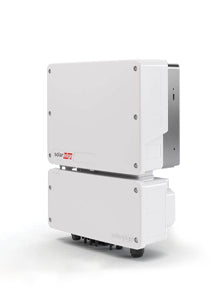
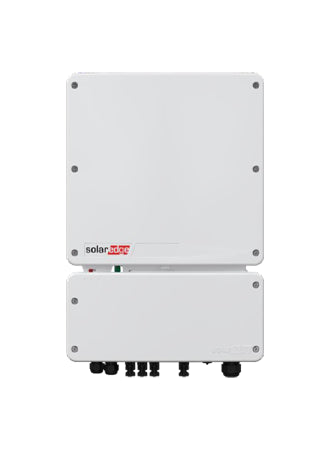
SolarEdge 5,000W Home Hub Inverter with Whole Hub Backup Potential 1PH
£731.58
Out of stock
Sold out193 products in stock — next-day UK dispatch.
SolarEdge

SolarEdge
SolarEdge
SolarEdge
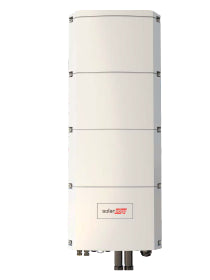
SolarEdge







Pylontech


Battery storage turns a solar array from a daytime generator into an around-the-clock energy system — storing surplus generation for the evening, charging on cheap overnight tariffs and providing backup where specified. We stock complete storage packages, self-consumption bundles and individual battery modules from Fox ESS, Pylontech, Sunsynk, Sigenergy, Huawei and other leading brands, at trade prices with live UK stock.
Low-voltage (48V-class) batteries such as classic rack-mount modules remain a flexible, widely compatible choice and parallel easily for capacity. High-voltage stacked systems — where modules connect in series under a master control unit — operate more efficiently at higher power and dominate new residential and commercial specifications. High-voltage stacks are ecosystem products: the modules, control unit and inverter must come from matched, approved combinations, so always confirm compatibility before mixing components. Product pages state the required master units, minimum module counts and compatible inverters.
Virtually everything we stock uses lithium iron phosphate (LiFePO4) chemistry, chosen across the industry for its thermal stability, long cycle life and high usable depth of discharge. When comparing systems, look at usable capacity rather than nominal capacity, the continuous charge/discharge rating in kW (which determines how quickly the battery can absorb surplus solar or cover an evening load), and cycle warranty terms. Most households pair storage in the 5kWh to 15kWh range with their array; commercial and heat-pump-heavy properties often specify considerably more, which is where stackable systems earn their keep — capacity can be extended module by module as requirements grow.
Our self-consumption and storage packages bundle matched inverters and batteries at package pricing, taking the compatibility question off the table. If you are extending an existing system, check the maximum module count and firmware requirements for your control unit, and note that some manufacturers require batteries within a stack to be of similar age. The System Builder sizes storage against your usage and array in about a minute.
Storage economics improved sharply with time-of-use tariffs: charging overnight at off-peak rates and discharging through the day often pays back faster than solar-only self-consumption, and several battery ecosystems now integrate directly with smart tariff platforms to automate the cycle. If backup during a power cut matters, check the specification carefully — backup requires an inverter with EPS or backup output, appropriate wiring of protected circuits and, on many systems, an additional changeover accessory, and switchover behaviour differs between whole-home and essential-circuit designs. Product pages state EPS capability where it exists, and our team can confirm what a given inverter and battery pairing supports before you order.
It depends on consumption, array size and tariff. Most homes specify 5–15kWh usable capacity; properties with heat pumps or EVs often go larger. The System Builder sizes storage against your details in about a minute.
No — especially with high-voltage stacks, batteries and inverters must be approved, matched combinations. Compatible pairings are listed on each product page and enforced by the System Builder.
Nominal is the total stored energy; usable is what the system allows you to draw, set by the depth of discharge. Compare usable capacity when weighing up systems.
Stackable systems are designed for expansion up to a stated maximum module count. Check the limits and any module-age matching requirements on the product page for your control unit.
Lithium iron phosphate offers strong thermal stability, long cycle life and high usable depth of discharge, which is why it has become the standard chemistry for home and commercial storage.