
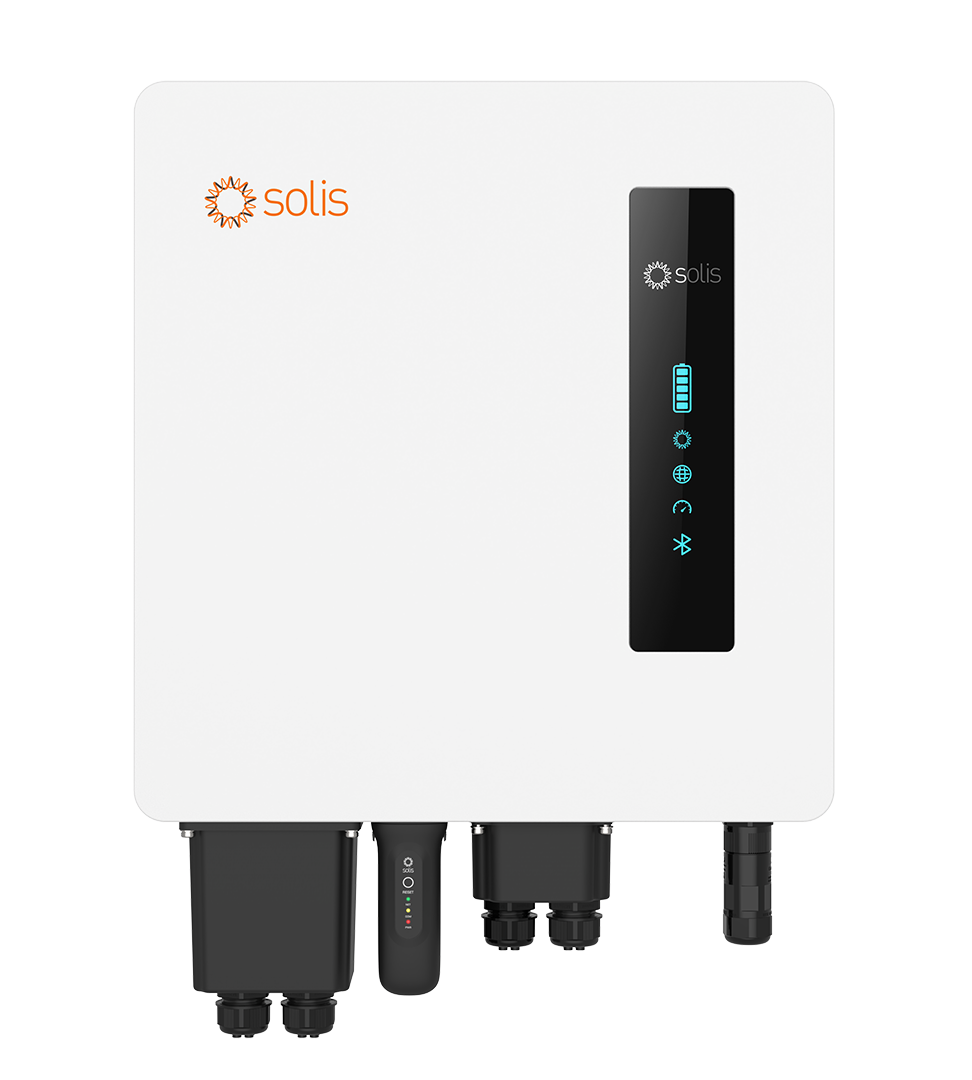
Solis Single Phase 5kW Low Voltage AC-Coupled Inverters
- Secure Checkout
- Next Working Day(Usually)
- Tracked Delivery
Solis Single Phase 5kW Low Voltage AC-Coupled Inverters
The Solis S6 5 kW AC-coupled inverter (S6-EA1P5K-L) adds a 40–60 V lithium battery to a home that already has solar. It has no PV inputs of its own: it joins the house wiring on the AC side, so the existing panels and grid-tied inverter carry on as they are, while it moves up to 105 A in or out of the battery.
Surplus that would otherwise be exported goes into the battery and is used in the house later, six time-of-use windows let it charge from a cheap overnight rate as well, and peak shaving draws on the battery only when grid import climbs past a level you set. Being a separate unit, it suits a system whose inverter is staying put rather than one due for replacement.
The 5 kW in figures
Adding a battery to solar you already have
Solis built the EA1P range to turn an existing on-grid system into a hybrid one. In Self-Use mode the panels serve the home first and the surplus charges the battery; once it is full, the rest is exported as before. Feed-in Priority swaps that second step, exporting up to the set quota and storing only what is left over, so it is the wrong mode for a site with export held at zero. Peak-shaving discharges the battery only while grid import is above the limit you choose.
Within those modes, Time of Use gives six charge and six discharge windows, each at a current you set. With Allow Grid Charging on, the inverter makes up from the grid whatever the panels cannot supply during a charge window, which is how an overnight tariff fills the battery. Between times it drops into a low-power standby, and real-time battery monitoring, remote firmware upgrades and a battery-healing function look after the battery over its life.
Batteries it works with
The starting point is a 40–60 V lithium battery that talks to the inverter over CAN. The setup menu names Pylontech, BYD, Dyness and PureDrive LV models, and has general settings for 48 V and 51.2 V lithium batteries without communication. Solis's compatible battery list for the S6-EA1P(3.6-6)K-L range (V1.5, March 2024) runs to dozens of brands, among them BYD's Battery-Box Premium LVS and LVL, Pylontech's UP5000, US2000B and US3000A, Dyness's DL Series and PowerDepot H5B, Fox's LV5200 and LG's RESU range.
Solis attaches two conditions. Compatibility varies by market, so confirm a pairing with Solis for a UK install, and fitting a battery that is not compatible voids the inverter's warranty. Check the battery's own current rating too: the inverter charges and discharges at up to 105 A, and a battery rated lower sets the limit. A single Dyness DL5.0C Pro, for example, charges at up to 75 A and discharges at up to 100 A.
Where it goes and how it is wired
It hangs on its backplate truly vertical, within 5° either way, at least 250 mm clear of other equipment and with its bottom edge 800 mm or more above the ground. Solis's ideal spot is a north-facing wall under an eave, out of direct sun, which makes the output derate, and out of direct rain and snow, despite the IP66 rating. The heat sink can reach 75 °C, so the wall has to be non-combustible and able to carry four times the unit's weight; keep it 3 m from anything flammable and out of rooms people spend long stretches in, because it can be noticeably loud.
The grid side takes 2.5–6 mm² cable, 6 mm² past 20 m, behind a 40 A protective device. On the battery side, Solis recommends a DC breaker between battery and inverter to prevent arcing, rated 160 A for this size, and the four R-terminals in the box are for the battery leads. The external earth conductor should be 4 mm² or more.
In the box
- 1 × Solis S6-EA1P5K-L inverter
- 1 × wall mounting backplate
- 4 × fastening screws (ST6.3 × 60)
- 2 × fastening screws (M4 × 12)
- 1 × AC connector assembly
- 4 × R-terminals, for the battery connection
- 1 × Bluetooth antenna
- 6 × RJ45 connectors
- 1 × USB Wi-Fi dongle
- 1 × CT clamp
- 1 × quick installation manual
- The battery: Solis sells the inverter without one
- The Eastron single-phase meter, an optional extra
- Battery leads and the 160 A DC breaker, plus the AC cable and 40 A grid-side protection
DNO approval
At 230 V the 5 kW's rated output current is 21.8 A, over the 16 A per phase that G98 allows, and the existing PV inverter counts towards the same total for the premises. The installer therefore applies to the DNO under G99 and waits for approval before connecting it. G98 and G99 are both among the grid codes on Solis's datasheet.
Order alongside
-
 Solis Eastron SDM120CT single-phase meter
The optional meter, with its own external CT, wired to the inverter's Meter port over RS485. It is the part for a meter position too far away for the CT lead to reach.
-
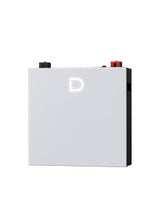 Dyness DL5.0C Pro 5.12 kWh battery
From the Dyness DL Series named on Solis's list for this range. One module charges at up to 75 A, under the inverter's 105 A.
-
 Warranty extension to 10 years
Five more years on the standard five. Put the inverter's serial number in the order notes; the certificate arrives from Solis in about 6 to 8 weeks.
-
 Warranty extension to 20 years
Fifteen years on top of the standard five, taking the EA1P's cover to 20 years.

The main CT can be extended to 15m. If the run from power source to inverter exceeds 15m then the SOL-METER-1PH-EASTRON is required.
Note: no EPS output / no ac back up available
Questions on the S6-EA1P5K-L
Only where the CT cannot reach. The inverter measures with either a CT or a meter, picked under Meter/CT Setting in the app, and a CT clamp comes in the box. Its lead extends to 15 m; a longer run calls for the Eastron SDM120CT meter.
From the SolisCloud app over Bluetooth: More Tools, Local Operation, Connect with Bluetooth, then pick the inverter by its serial number. Quick setup steps through the time, battery model, meter setting, grid code and work mode, and the Bluetooth antenna in the box extends the signal for the job. The USB Wi-Fi dongle then handles monitoring; the COM port accepts only Solis's USB-type loggers.
Yes. Switch on Time of Use and Allow Grid Charging, set a charge window and a current, and the grid tops up whatever the panels cannot supply in that window. Outside Time of Use, grid charging only starts if the battery falls to its Force Charge level.
No. It has no backup (EPS) output, so it cannot supply any circuit while the grid is down. Its job is moving solar and cheap-rate energy into the hours the home would otherwise import.
Electrical
| Rated Power (Pmax) | 5 kW |
|---|---|
| Battery Type | Li-ion |
| Battery Voltage | 40 - 60 V |
| Max AC Power (5 min) | 5 kVA |
Mechanical
| Height | 465 mm |
|---|---|
| Width | 440 mm |
| Depth | 192 mm |
| Weight | 19.9 kg |
| IP Rating | IP66 |
Most orders are delivered the next working day, subject to the delivery method, product availability, order processing time and destination. Next-working-day delivery is typical for standard deliveries and is not guaranteed for every order.
Pallet deliveries may take an additional day or so, depending on the products ordered, the delivery location and the carrier’s schedule. Special delivery arrangements may also require additional time.
Please refer to your tracking information for the latest delivery updates.
